

How PhysioSensing Helps Us Measure Concussion Recovery
How PhysioSensing Helps Us Measure Concussion Recovery

July 3, 2026
Irvine Concussion & Spine Specialist
Southern California Concussion & Spine Center
Orange County, California
When "I Feel Fine" Doesn't Tell the Whole Story
After a concussion, many patients tell us they feel "mostly back to normal." Yet they still notice subtle symptoms like dizziness, feeling off balance, difficulty walking in busy environments, or feeling unsteady during sports.
The challenge is that these symptoms aren't always visible during a traditional physical exam.
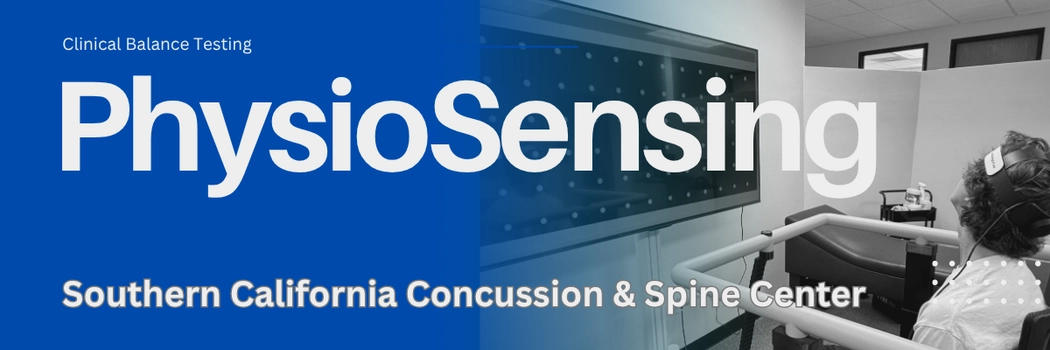
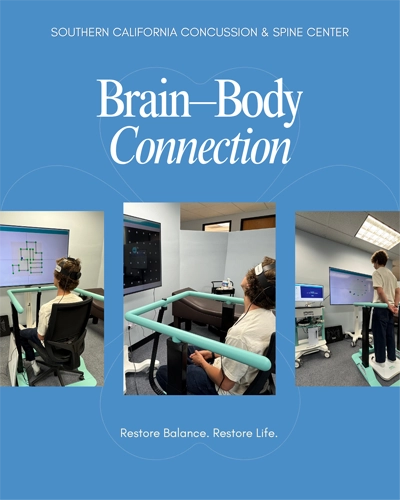
At Southern California Concussion & Spine Center in Irvine, we use advanced technology to objectively measure how your balance system is functioning. One of the newest tools in our clinic is the PhysioSensing balance assessment system, which helps us identify problems that may otherwise go unnoticed and track your recovery with measurable data rather than guesswork. PhysioSensing combines force plate testing, motion sensors, and balance exercises to evaluate how well your brain, inner ear, eyes, and body work together to keep you stable.
What Is the PhysioSensing System?
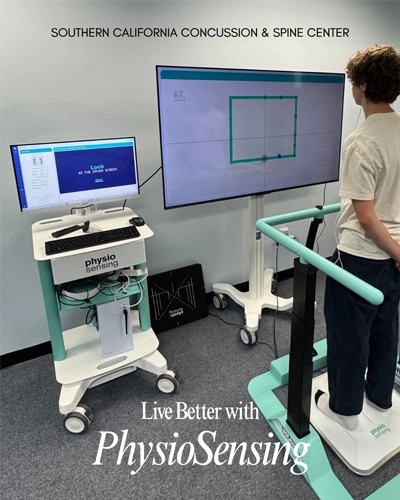
Think of the PhysioSensing system like a high-tech balance analyzer. While you're standing on a specialized platform, the system measures tiny movements your body makes to keep you upright. Even when you think you're standing perfectly still, your body is constantly making small adjustments to maintain balance.
These tiny movements are invisible to the naked eye but can provide valuable information about how your nervous system is functioning.
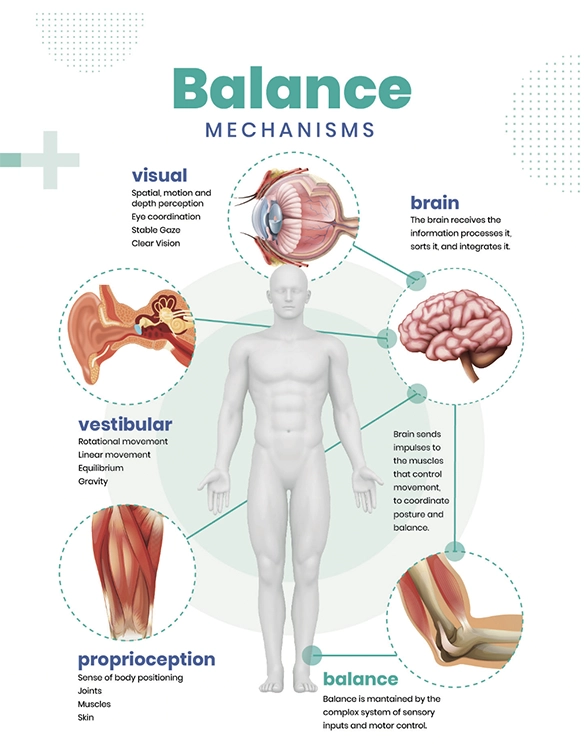
The system can also use wearable motion sensors and visual exercises to evaluate how different parts of your balance system are working together, including:
- Your brain
- Your inner ear (vestibular system)
- Your vision
- Your muscles and joints
- Your neck position and movement
The technology creates objective reports that allow us to measure progress over time instead of relying only on symptoms.
Why Balance Matters After a Concussion
Many people don't realize that balance is one of the most commonly affected systems after a concussion.
Your brain constantly combines information from three different sources:
- Your eyes
- Your inner ear
- Your body's position sensors in your muscles and joints
If communication between these systems is disrupted after a concussion, you may experience:
- Dizziness
- Feeling "off"
- Motion sensitivity
- Difficulty walking in crowds
- Trouble turning your head quickly
- Poor athletic performance
- Increased risk of another injury
Sometimes these problems are obvious. But sometimes they're so subtle that athletes, for example, don't notice them until they return to practice or competition.
Objective testing helps us identify these hidden deficits before they become a bigger problem.
What Does the Test Feel Like?
Most patients are surprised by how simple the evaluation is. Depending on your symptoms, you may be asked to:
- Stand still with your eyes open and closed
- Shift your weight in different directions
- Perform balance challenges
- Turn your head during certain activities
- Complete vision and movement tasks
The testing is painless, non-invasive, and typically takes only a short amount of time.
Because the system collects precise measurements, we can compare your performance over multiple visits to see whether you're truly improving, not just feeling better.
Why Objective Testing Is So Valuable
One of the biggest challenges in concussion care is that symptoms don't always tell the whole story. Two athletes may report feeling exactly the same, but one may still have measurable balance deficits that increase their risk of another concussion.
Objective testing allows us to:
- Establish a true baseline
- Detect subtle balance problems
- Monitor improvement over time
- Personalize rehabilitation exercises
- Make more informed return-to-play recommendations
- Give patients visual proof of their progress
Rather than guessing whether your balance has improved, we can measure it.
Who Can Benefit From PhysioSensing Testing In Irvine
This technology isn't just for athletes. We use advanced balance assessment for patients experiencing:
- Sports-related concussions
- Post-concussion syndrome
- Dizziness
- Vertigo
- Vestibular disorders
- Balance problems
- Persistent headaches after head injury
- Neck injuries affecting balance
- Difficulty returning to sports or exercise
Whether you're a student-athlete, weekend warrior, or someone recovering from a car accident, understanding how your balance system is functioning is an important part of recovery.
Why Dr. Hoy Invests in Advanced Concussion Technology
Concussion diagnosis and rehabilitation continue to evolve, and Dr. Hoy is committed to staying at the forefront of the latest evidence-based technology to provide the highest level of care for his patients in Irvine.
Rather than relying solely on symptom reports, Dr. Hoy believes in using objective testing whenever possible. Technologies like the PhysioSensing system allow him to collect precise data about a patient's balance, vestibular function, and recovery, helping ensure treatment decisions are based on measurable results instead of guesswork.
By continually investing in advanced diagnostic tools and staying current with emerging concussion research, Dr. Hoy is able to offer patients in Irvine and throughout Orange County access to technology that is often found only in specialized concussion and sports medicine centers.
His goal is simple: provide every patient with the most accurate diagnosis, the most personalized treatment plan, and the safest path back to school, work, sports, and everyday life.
Concussion Care in Irvine, CA
At Southern California Concussion & Spine Center, we believe the best concussion treatment combines clinical expertise with objective technology.
The PhysioSensing system allows us to look beyond symptoms and understand exactly how your balance and vestibular systems are functioning. That means more personalized treatment plans, measurable progress, and greater confidence when it's time to return to school, work, or sports.
If you're experiencing dizziness, balance problems, or lingering concussion symptoms, our team is here to help you recover safely and confidently.
Schedule a Concussion Evaluation
If you've suffered a concussion or continue to experience dizziness, imbalance, or difficulty returning to your normal activities, schedule a comprehensive evaluation at Southern California Concussion & Spine Center.
Our advanced balance assessment technology helps us identify hidden deficits, guide your rehabilitation, and monitor your progress every step of the way.
Your recovery deserves more than guesswork. It deserves objective answers.
Call or text us today at (949) 653-6777 to schedule a free consultation.
Frequently Asked Questions
What is the PhysioSensing system?
The PhysioSensing system is an advanced balance assessment tool that measures how your brain, inner ear, vision, and body work together to keep you stable. It helps identify subtle balance and vestibular problems that may not be visible during a standard physical examination.
Is PhysioSensing only for concussion patients?
Is the testing painful?
Why can't my balance just be checked during a regular exam?
How does this technology improve concussion treatment?
Who should consider this type of evaluation?
How long does the evaluation take?
Does feeling "better" mean my concussion has fully healed?
Why choose Southern California Concussion & Spine Center in Irvine?
About the Author
Southern California Concussion & Spine Center | Irvine, CA
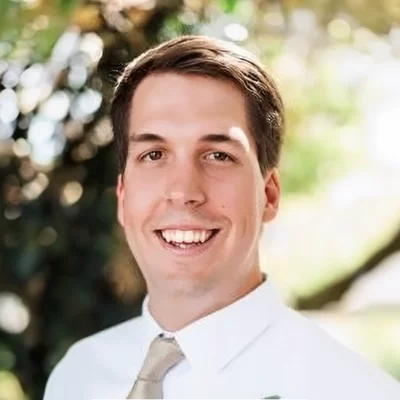
Dr. Nicholas Hoy is a board-certified chiropractic neurologist and concussion specialist who focuses on the evaluation and rehabilitation of concussion, dizziness, balance disorders, vestibular dysfunction, and neurological conditions.
He helps patients throughout Irvine and Orange County identify the underlying causes of persistent symptoms and develop evidence-based treatment strategies designed to support recovery and improve quality of life.
As both a concussion specialist and a father of two young children, Dr. Hoy understands the concerns individuals and families face when dealing with brain injuries. His approach combines advanced neurological assessment with compassionate, patient-centered care to help patients safely return to work, school, sports, and everyday life.
References
- Centers for Disease Control and Prevention. About Mild Traumatic Brain Injury and Concussion. https://www.cdc.gov/traumatic-brain-injury/about/index.html
- American Academy of Neurology. Evidence-based Guideline Update: Evaluation and Management of Concussion in Sports. 2013.
- Concussion in Sport Group. The 6th International Consensus Statement on Concussion in Sport (Amsterdam 2022). British Journal of Sports Medicine. 2023.
- American Physical Therapy Association. Clinical Practice Guideline: Physical Therapy Evaluation and Treatment After Concussion/Mild Traumatic Brain Injury. Journal of Orthopaedic & Sports Physical Therapy.
- Vestibular Disorders Association. Vestibular Rehabilitation Therapy (VRT). https://vestibular.org
- National Institutes of Health. Traumatic Brain Injury Information. https://www.ninds.nih.gov/health-information/disorders/traumatic-brain-injury
- PhysioSensing Balance & Vestibular Assessment System. https://www.physiosensing.net

Monday
7:30am - 12:00pm
2:00pm - 6:00pm
Tuesday
7:30am - 12:00pm
2:00pm - 5:00pm
Wednesday
7:30am - 12:00pm
2:00pm - 6:00pm
Thursday
Closed
Friday
7:30am - 12:00pm
2:00pm - 6:00pm
Saturday & Sunday
Closed

Southern California Concussion and Spine Center
1 Peters Canyon Rd STE 120
Irvine, CA 92606